
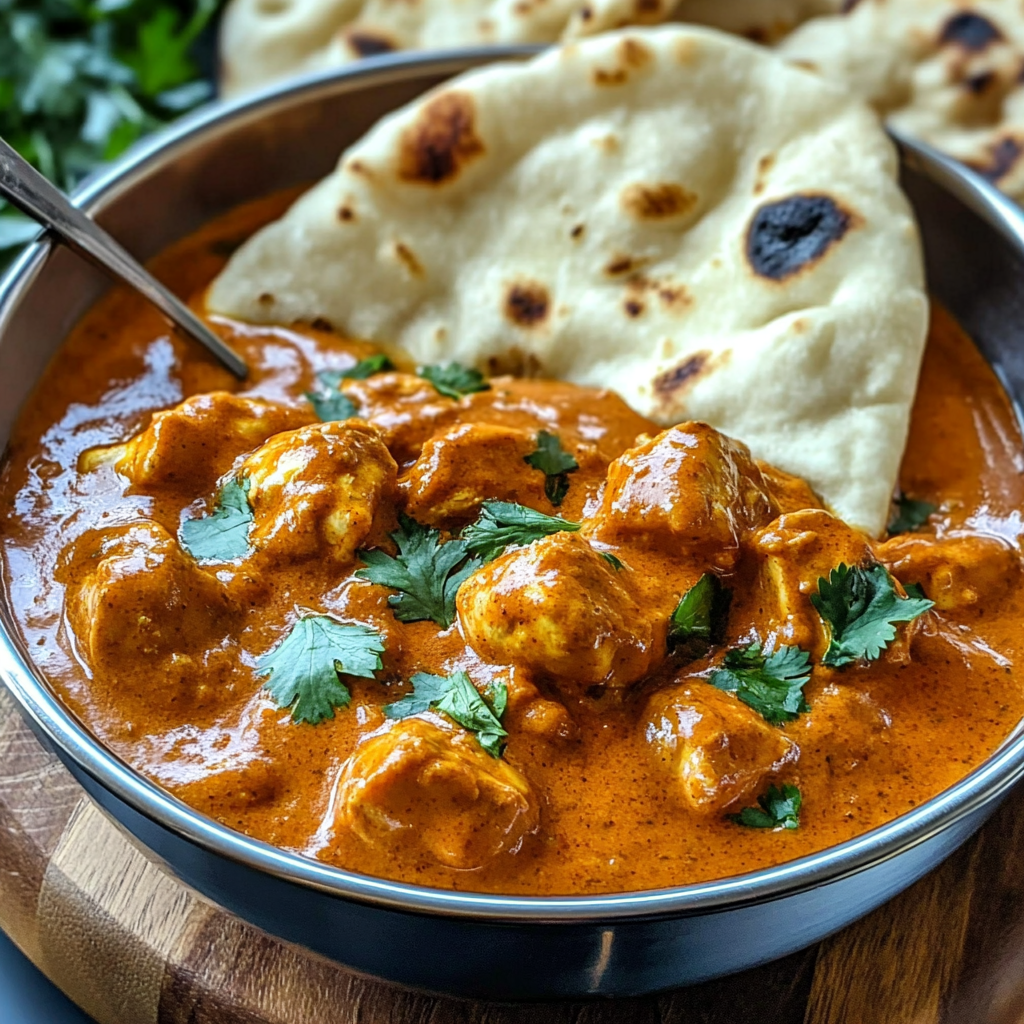
Butter chicken, also known as murgh makhani, is one of the most iconic and beloved dishes in Indian cuisine. Known for its rich, velvety tomato-based sauce and tender pieces of chicken, this dish delivers a comforting combination of warm spices, creamy texture, and deep savory flavor. Although it is often enjoyed in restaurants, preparing butter chicken at home is surprisingly simple when you follow a clear step-by-step process.
This recipe recreates the classic restaurant-style flavor using simple ingredients and straightforward cooking techniques. The chicken is simmered in a creamy, aromatic sauce made with butter, spices, tomato paste, and heavy cream, creating a dish that pairs beautifully with basmati rice or warm naan bread.
Ingredients
For the Chicken
- 1 ½ pounds boneless, skinless chicken breasts, cut into bite-sized chunks
- 1 tablespoon vegetable oil
- 1 tablespoon butter
For the Butter Chicken Sauce
- 1 medium onion, diced
- 1 teaspoon ginger, minced
- 2–3 cloves garlic, minced
- 4 tablespoons tomato paste
- 1 tablespoon garam masala
- 1 teaspoon chili powder
- 1 teaspoon cumin
- 1 teaspoon salt
- ¼ teaspoon black pepper
- 1 cup heavy cream
For Serving
- Basmati rice or naan bread
- Fresh cilantro for garnish (optional)
Preparation Time
Prep Time
10 minutes
Cooking Time
20 minutes
Servings
4 servings
Calories
459 kcal per serving
Instructions
Step 1: Prepare and Cook the Aromatics
Start by placing a large skillet or deep pan over medium-high heat. Add the vegetable oil along with the butter and allow them to heat together until the butter melts completely and begins to foam slightly. This combination of oil and butter prevents the butter from burning while still delivering the rich flavor that defines butter chicken.
Once the butter has melted, add the diced onion to the skillet. Stir the onions gently so they cook evenly and coat in the butter and oil mixture. Allow them to cook for about 3 to 4 minutes, stirring occasionally. During this time, the onions should soften and begin turning a light golden color. This step is important because it builds the aromatic base of the sauce.
Next, add the minced ginger and minced garlic to the skillet. Stir them into the onions and cook for about 30 seconds. Continue stirring constantly so the garlic and ginger release their fragrance without burning. The mixture should become highly aromatic at this stage.
Step 2: Add the Chicken and Seasonings
Once the aromatics are fragrant, add the chicken chunks directly into the skillet. Spread them out slightly so they cook evenly.
Immediately add the tomato paste, garam masala, chili powder, cumin, salt, and black pepper. Stir everything together thoroughly so the chicken pieces become evenly coated with the spices and tomato paste.
Continue cooking for about 5 to 6 minutes. Stir occasionally to ensure the chicken cooks evenly and does not stick to the pan. As it cooks, the chicken will begin to firm up and the spices will blend with the tomato paste, creating a thick, deeply flavored base for the sauce.
Make sure the chicken is cooked through during this stage. The pieces should no longer appear pink and should be coated in the aromatic spice mixture.
Step 3: Create the Creamy Butter Chicken Sauce
Once the chicken is cooked, slowly pour the heavy cream into the skillet. Stir thoroughly to combine the cream with the spiced tomato mixture. As you stir, the sauce will transform from a thick paste into a smooth, creamy gravy.
Reduce the heat to low so the mixture gently simmers rather than boils. Allow the butter chicken to cook for about 8 to 10 minutes, stirring occasionally. During this time, the sauce will gradually thicken and develop its characteristic creamy texture.
Simmering also allows the spices to fully infuse into the sauce and chicken. Taste the sauce toward the end of the cooking time and adjust the seasoning if needed.
Step 4: Finish and Serve
Once the sauce has thickened and the chicken is tender, remove the skillet from the heat.
If desired, sprinkle freshly chopped cilantro over the top for a burst of color and freshness. While the garnish is optional, it adds a light herbal note that complements the richness of the sauce.
Serve the butter chicken immediately while hot. Spoon the creamy chicken and sauce over a bed of fluffy basmati rice, allowing the rice to absorb the flavorful gravy. Alternatively, serve it alongside warm naan bread, which is perfect for scooping up the sauce.
Serving Suggestions
Butter chicken is incredibly versatile and pairs well with several traditional sides. Basmati rice is the most common accompaniment because its light, fluffy texture balances the richness of the sauce. Naan bread is another excellent option, allowing you to scoop up every bit of the creamy curry.
Roti or chapati can also be served for a lighter alternative. For a refreshing contrast to the warm spices, a cooling yogurt-based side dish can complement the meal beautifully.
Storage and Reheating
Leftover butter chicken stores well and often tastes even better the next day as the flavors continue to develop.
Store leftovers in an airtight container in the refrigerator for up to three days. If you want to keep it longer, the dish can also be frozen in a freezer-safe container for up to three months.
To reheat, warm the butter chicken gently on the stovetop over low heat. Add a small splash of water or cream if the sauce becomes too thick. It can also be reheated in the microwave in short intervals, stirring between each interval to ensure even heating.