
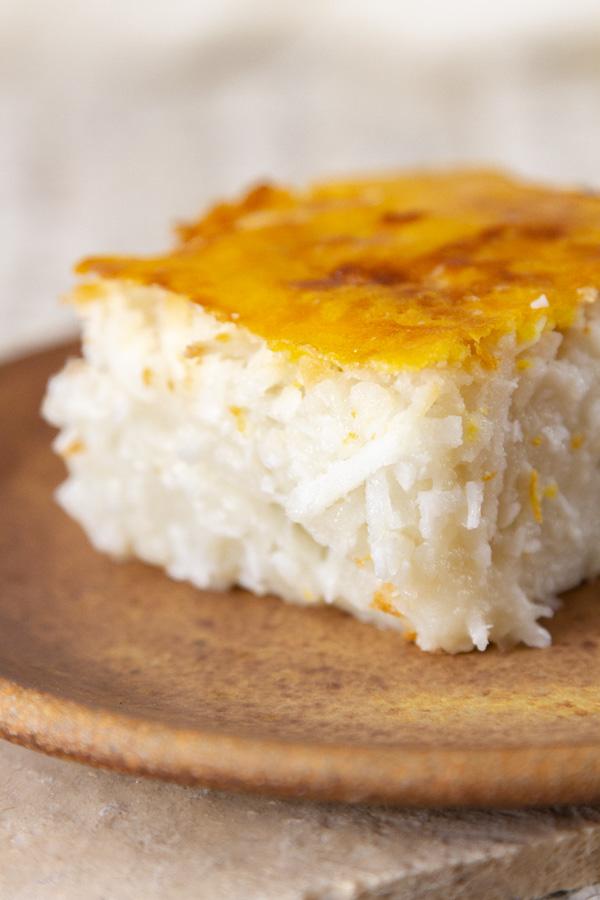
This Indonesian-inspired Sticky Coconut Cake, also known as Wingko Babat, is a wonderfully chewy, richly flavored coconut treat that’s a must-try for coconut lovers. Originating in Java, this cake is distinct from traditional Western cakes — it’s denser and stickier, with a deep coconut taste and a satisfying texture that’s reminiscent of a moist coconut macaroon. While traditional versions may be cooked in special pans, this adaptation is baked in a regular oven for convenience without sacrificing flavor or texture.
Ingredients
- 2 eggs, separated (you’ll use both the whites and the yolks)
- 1¼ cups granulated sugar (this sweetens the cake and helps create a chewy interior)
- 2¼ cups full-fat canned coconut milk (shake the can well before opening so the cream and liquid are fully incorporated)
- 3 cups shredded sweetened coconut (this provides the characteristic coconut flavor and texture)
- 1½ cups glutinous rice flour (this rice flour is essential — it gives the cake its chewy, sticky nature)
- 1 teaspoon vanilla extract (for aroma and balanced sweetness)
Instructions
Prepare and Preheat
- Preheat the oven: Set your oven to 350°F (about 175°C) and allow it to fully reach temperature before baking. This ensures even baking from the moment the cake goes in.
- Separate the eggs: Carefully crack each egg and separate the whites from the yolks into two small bowls. Reserve the yolks for later and set them aside.
Make the Batter
- Whisk egg whites and sugar: In a medium-sized bowl, use a whisk to beat together the egg whites with the granulated sugar. Stir them until the mixture becomes slightly frothy and the sugar begins to dissolve into the whites. This step helps incorporate some air and improve texture.
- Add coconut milk: Once the egg whites and sugar are integrated, slowly pour in the full-fat coconut milk while continuing to stir. Incorporating the coconut milk gradually helps maintain a smooth texture in the batter.
- Combine remaining ingredients: Add the shredded sweetened coconut, glutinous rice flour, and vanilla extract into the bowl. Use a spatula or wooden spoon to mix everything thoroughly. Be sure to scrape the bottom and sides of the bowl so all dry ingredients are fully incorporated, and there are no clumps of coconut or rice flour. This batter will be thin and somewhat liquid, which is normal for this recipe.
Bake the Cake
- Prepare the pan: Lightly grease an 8×8-inch square baking pan with a thin layer of oil or non-stick spray to prevent sticking. Pour the batter into the prepared pan, spreading it evenly so the surface is as level as possible.
- Initial bake: Place the pan in the preheated oven and bake for 45 minutes. During this time, the cake will transform from a liquidy batter to a firm, sticky cake with a set texture around the edges and middle.
Add Topping and Finish
- Brush with egg yolks: Once the initial bake is complete, carefully remove the pan from the oven. Take your reserved egg yolks and gently brush them over the top of the cake. Use a pastry brush and apply with a light hand so you don’t tear the surface. This golden wash helps create a rich, slightly crisp top once broiled.
- Broil to brown: Switch your oven to the broil setting. Place the cake back under the broiler for 5–10 minutes — watch it closely! It can go from golden to overly dark very quickly. Pull it out once the top turns a deep, appealing golden brown.
Cool and Serve
- Cool thoroughly: Once browned, set the baking pan on a wire rack and let the cake cool completely at room temperature. As it cools, the cake firms up further.
- Refrigerate: After cooling, cover the pan with plastic wrap and put it in the refrigerator for at least 8 hours or overnight. This resting period ensures the cake fully sets and achieves the classic sticky texture that defines Wingko Babat.
- Cut and serve: When fully chilled, remove from the fridge and slice the cake into shapes of your choice — traditional squares or triangles cut from thirds both ways work beautifully. Serve cold straight from the fridge or let the slices come to room temperature before enjoying.