
Ingredients
(Quantities and exact items as listed in the original recipe linked by the user — rewritten here descriptively but without adding new ingredients.)
- Aubergines (eggplants), sliced
- Potatoes, sliced
- Ground beef (replacing any pork if originally mentioned)
- Onion, finely chopped
- Garlic cloves, minced
- Tomatoes, peeled and chopped (fresh or canned)
- Tomato paste
- Olive oil
- Salt
- Black pepper
- Ground cinnamon
- Breadcrumbs (if included)
- Turkey bacon (if present in recipe) – replace bacon with turkey bacon
- Chicken ham (if present in recipe) – replace ham with chicken ham
- Cheese for sprinkling / gratin
- Ingredients for the béchamel sauce:
- Butter
- All-purpose flour
- Milk
- Salt and pepper
- Nutmeg (optional)
- Grated cheese for the béchamel sauce
Overview
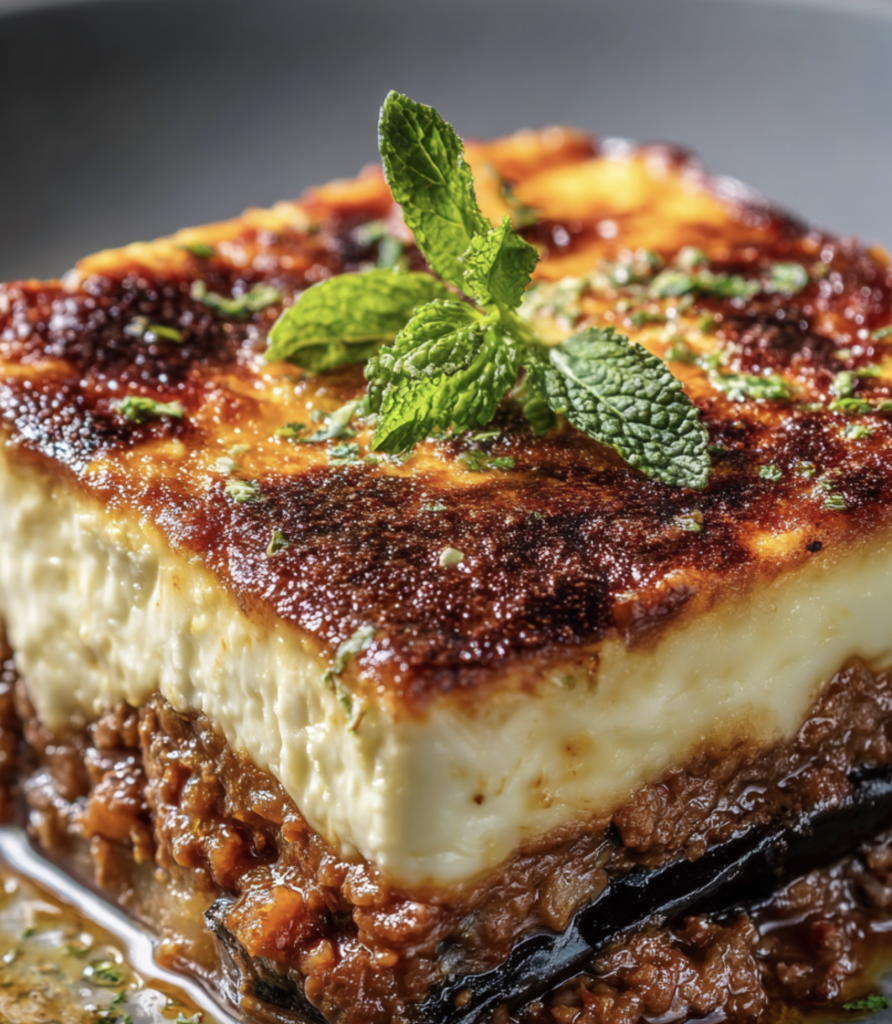
This Greek moussaka is a comforting layered casserole that combines soft eggplant, tender potatoes, rich seasoned beef, and a creamy béchamel sauce for a richly flavorful main dish. Traditionally served as a centerpiece at large family meals, the dish is deeply satisfying and beautifully balanced, with distinct layers that come together through careful cooking and assembly.
Instructions
Step 1: Prepare the Vegetables
Begin by washing the eggplants under cold running water, then pat them dry with a clean kitchen towel or paper towel. Slice each aubergine into even, moderately thick rounds. If you prefer, lightly sprinkle salt over the slices and let them sit for 20–30 minutes so that any excess bitterness is drawn out before cooking. After this resting period, gently blot the slices with a towel to dry them once more.
Next, wash and peel the potatoes. Using a sharp knife or mandoline, cut them into rounds of similar thickness to the aubergines so that they cook evenly. Set both the eggplant and potato slices aside on a clean surface while you prepare the other components.
Step 2: Cook the Potatoes
Heat a generous amount of olive oil in a large, heavy frying pan over medium heat. Once the oil shimmers, carefully add a layer of potato slices. Allow them to cook without moving them too much so they develop a light golden sear on each side. This initial cooking helps them develop a pleasant texture that will stand up well once layered in the casserole. Once the potatoes are lightly golden, transfer them to a plate lined with paper towels to drain excess oil and set aside.
Alternative methods like parboiling the potatoes for a few minutes in boiling water until just tender also work well — the goal is to ensure they are not raw when assembled into the dish.
Step 3: Cook the Eggplant
In the same skillet (you can reuse a little of the potato oil if needed), heat additional oil until it is hot but not smoking. Place the aubergine slices into the pan in batches, cooking them until they become soft and lightly cooking golden on each side. Eggplant naturally soaks up oil, so allow the slices to cook and turn once before flipping to ensure they soften thoroughly. When each batch is done, lay the slices on paper towels to drain off any excess oil.
Step 4: Prepare the Beef Sauce
Before making the sauce, heat a couple of tablespoons of olive oil in a large sauté pan over medium heat. Add the finely chopped onion and cook it slowly until it becomes soft and translucent. Stir in the minced garlic and cook for another thirty seconds, just until fragrant.
Add the ground beef to the pan, breaking it up with a wooden spoon so it cooks evenly. Cook until the beef loses its pink color and becomes richly browned, stirring every so often so it does not stick to the pan.
Once the beef is browned, stir in the tomato paste, then add the chopped tomatoes. Season the mixture with salt, freshly ground black pepper, and a light sprinkle of ground cinnamon. Reduce the heat to low and let the sauce gently simmer for about 20 to 30 minutes, uncovered, until it thickens and the flavors concentrate. Stir occasionally to prevent sticking and to meld the ingredients into a rich, aromatic sauce.
Step 5: Preheat the Oven and Layer the Dish
While your sauce simmers, preheat your oven to a moderate temperature (around 180–190°C). Take a large, deep baking dish suitable for casseroles, and begin the assembly. Start by arranging a single layer of the cooked potato slices evenly across the bottom of the dish, overlapping them slightly so there are no gaps.
Next, place a layer of eggplant slices over the potatoes, followed by spreading the rich beef tomato sauce over the eggplant. Press the sauce gently with the back of a spoon so it covers every part of the layer. Continue layering the remaining eggplant slices on top of the sauce, and if there is extra beef sauce, spread that evenly over the top.
If the recipe includes turkey bacon or chicken ham, this should be added in thin, evenly spaced pieces here so that every bite can capture a bit of that flavor.
Step 6: Make the Béchamel Sauce
In a medium saucepan over medium heat, melt the butter slowly. Once fully melted, sprinkle in the flour and whisk constantly to form a smooth roux. Let it cook for a minute or two without browning to remove the raw flour taste.
Gradually pour warm milk into the roux while whisking briskly. Continue to whisk until the mixture becomes smooth and begins to thicken to a creamy consistency. Season with a pinch of salt, black pepper, and nutmeg if you like. When the sauce is thick enough to coat the back of a spoon, remove it from the heat and stir in a handful of grated cheese so it melts into the sauce.
Step 7: Assemble and Bake
Pour the béchamel sauce over the layered casserole, spreading it carefully so that it covers the entire surface. Finish with a final generous sprinkle of cheese or breadcrumbs if your recipe lists them.
Place the baking dish in the preheated oven and bake for approximately 35 to 45 minutes, or until the béchamel layer is golden and bubbling at the edges. This baking time allows all of the flavors to meld and the layers to set.
Once done, turn off the oven and let the moussaka rest for at least 15–20 minutes before cutting. This resting period lets the layers firm up so you can cut neat squares.