
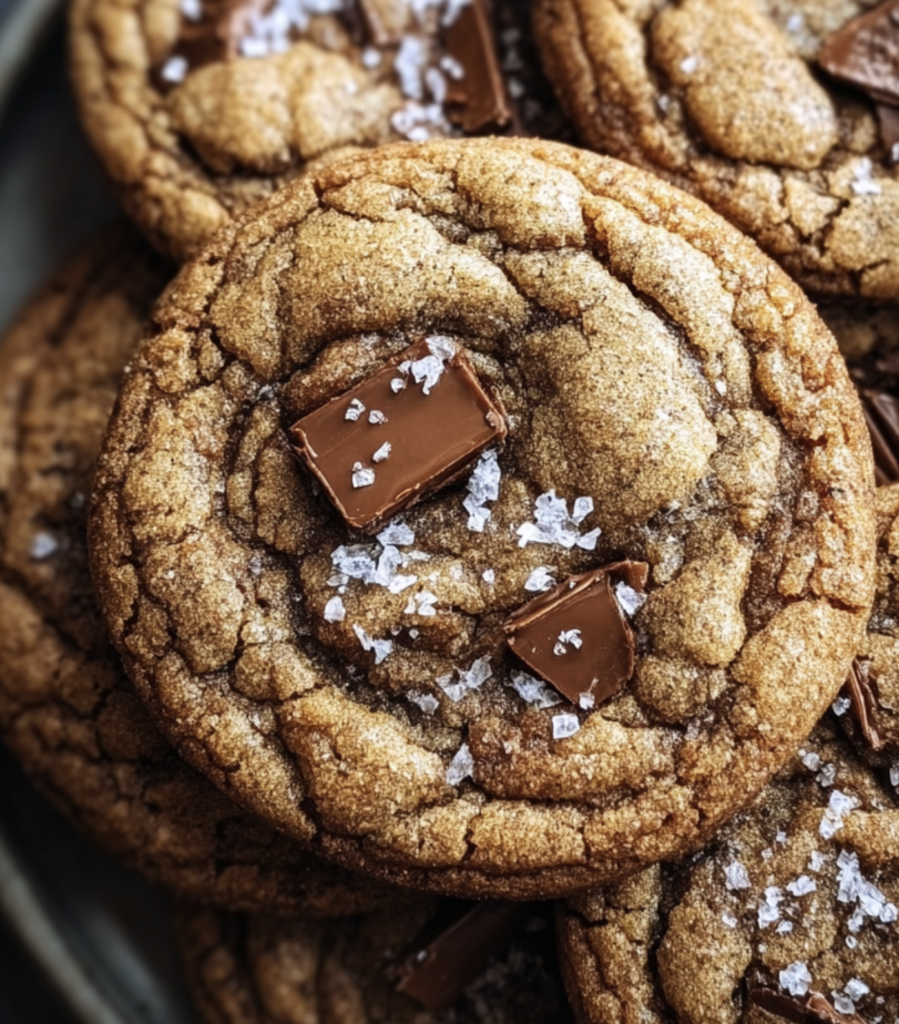
These cookies are rich, deeply flavorful, and loaded with texture — combining buttery browned butter, bittersweet chocolate, crunchy toffee bits, and a hint of coffee that elevates every bite. Browning the butter before mixing gives these cookies a subtle nuttiness and complexity that transforms a classic chocolate chip cookie into something far more indulgent. Coffee and chocolate naturally complement each other, and toffee adds delightful crunch and caramelized sweetness throughout the cookie. The dough is chilled before baking to help deepen flavor and improve texture, and the final cookies come out crisp at the edges and soft and gooey in the center, making them irresistible.
Ingredients
- 1 cup (2 sticks) unsalted butter
- 1/2 cup granulated sugar
- 1 1/2 cups light brown sugar
- 2 eggs
- 2 teaspoons vanilla bean paste (or vanilla extract)
- 1 teaspoon baking soda
- 1 teaspoon salt
- 1/2 teaspoon cream of tartar
- 1 tablespoon espresso powder
- 2 1/2 cups all-purpose flour
- 1 bag Guittard chocolate wafers or 2 bars bittersweet chocolate, finely chopped
- 1 bag toffee bits (such as Heath)
Instructions
Step 1: Browning the Butter
Begin by preparing the brown butter, which is the foundation of this recipe’s rich flavor. Place the unsalted butter in a medium-sized saucepan over a medium heat. As it begins to melt, you’ll notice the surface foam and hiss. At first, the butter will simply liquefy, but after a few minutes it will develop a lightly golden color and begin to smell nutty and aromatic. This is the milk solids toasting.
Continue to cook, stirring gently and keeping a close eye on the color — once you see small brown specks forming on the bottom of the pan and smell that deep, toasted aroma, immediately remove the pan from the heat. If the solids get too dark, the butter can taste burnt, so timing and attention here are key.
Pour the browned butter (including all the rich brown sediment) into a heat-proof bowl. Those brown milk solids are where much of the flavor lives, so scrape them all into the bowl. Let the butter cool until it’s warm but not hot before moving to the next step. This prevents the eggs from cooking when added.
Step 2: Creaming Sugars and Butter
Once the browned butter has cooled enough to touch comfortably, combine it with both the granulated sugar and the light brown sugar in a large mixing bowl. Using a hand mixer or stand mixer fitted with a paddle attachment, beat these together on medium speed until the mixture is well blended, glossy, and starts to lighten slightly in color. This process incorporates air, helping give structure to the cookie dough.
Add the eggs one at a time, beating briefly after each addition so they are fully incorporated. After both eggs are mixed in, add the vanilla bean paste and beat again until you have a smooth, harmonious mixture.
Step 3: Adding Dry Ingredients
In a separate bowl, combine your baking soda, salt, cream of tartar, espresso powder, and all-purpose flour. Whisk these dry ingredients together to ensure the espresso powder and leavening agents are evenly distributed through the flour.
With your mixer on low speed or using a large wooden spoon, gradually add the dry ingredients to the butter–sugar mixture. Stir until just combined — do not overmix. You want the dough to be uniform, but overworking it will make the cookies tough rather than soft and chewy.
Step 4: Adding Chocolate and Toffee
Once the dough has pulled together and there are no streaks of flour left, gently fold in the chocolate wafers or chopped bittersweet chocolate along with the toffee bits. The chocolate and toffee should be evenly distributed throughout the dough. The chocolate will melt slightly while baking, creating decadent pockets of gooey goodness, and the toffee will give each bite a satisfying crunch.
Step 5: Chilling the Dough
Cover the mixing bowl with plastic wrap or a lid and place it in the refrigerator. Refrigerating the dough for at least one hour is important — this resting time allows the flour to hydrate and the flavors to meld. It will also prevent the cookies from spreading too much in the oven, helping them hold a nice shape with slightly crisp edges and a soft center.
Step 6: Baking
Preheat your oven to 350°F (175°C) while the dough chills. Line baking sheets with parchment paper or silicone baking mats to prevent sticking and for easy cleanup.
Remove the dough from the refrigerator and use a scoop or spoon to portion it into generous balls — leave a couple of inches between each one on the baking sheet because these cookies will spread slightly as they bake.
Place the trays in the oven and bake for 10–12 minutes. You’re looking for lightly golden edges — the centers might still look slightly soft, but that’s perfect. Overbaking will make them dry; pulled at just the right time, they will be crisp on the outside and tender inside.
Once baked, let the cookies rest on the hot baking sheet for a minute or two. This helps them finish setting and makes them easier to transfer without breaking. Then move them to a wire rack to cool completely.
Serving and Storage
These cookies are best enjoyed at room temperature, allowing all the flavors — nutty browned butter, deep chocolate, sweet toffee, and rich espresso — to come through. Serve them with a cold glass of milk or a warm coffee for the perfect pairing. Store any leftovers in an airtight container at room temperature for 3–4 days, or freeze the baked cookies for longer storage.